
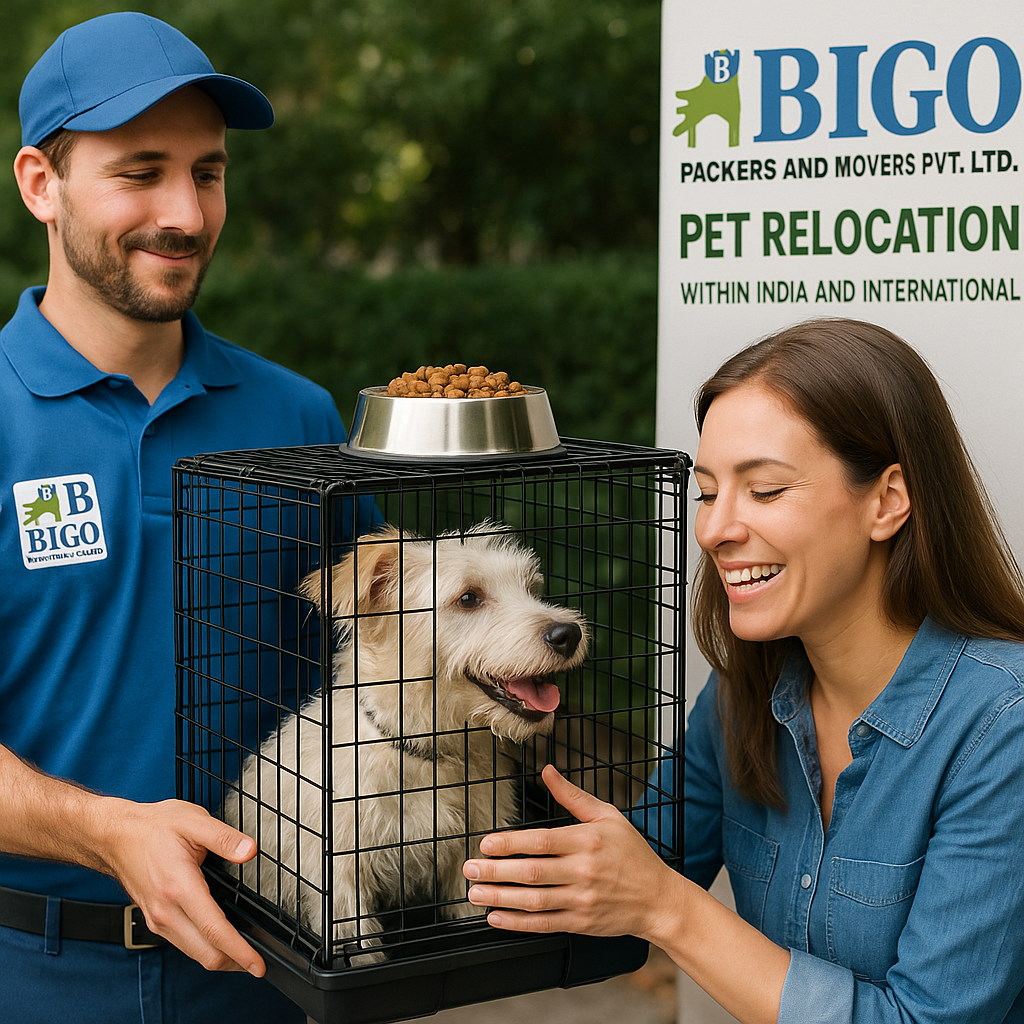
Pet Relocation — Safe, Stress-Free Moves for Dogs, Cats, Birds and Exotic Pets
Moving is stressful for people — imagine how it feels for an animal. At BIGO Packers & Movers, we provide professional
pet relocation services designed to keep your pets safe, healthy, and comfortable. Whether within India or
internationally, our trained handlers, IATA-approved crates, and veterinary support make sure your pets travel with care.
Why Professional Pet Relocation Matters
1. Safety and Animal Welfare
Professional pet relocation prioritizes your pet’s safety. Trained handlers monitor breathing, temperature and stress signs; they understand how to respond if an animal becomes distressed. A professional team also uses IATA-approved crates and climate-controlled vehicles, minimizing the physical risks of travel.
2. Legal & Logistical Expertise
International relocations involve country-specific rules: microchip formats, vaccination timing, blood titers, endorsed health certificates and sometimes quarantine. Mistakes or missing paperwork can cause delays or refusal at customs. A relocation expert navigates these requirements and coordinates with vets and authorities to avoid problems.
3. Personalized, Species-Specific Care
Different species (and different breeds) react differently to travel. Professionals make individualized plans: feeding schedules, crate comfort, medication timing, and calming techniques tuned to each animal’s temperament.
Domestic Pet Relocation in India — What to Expect
Moving a pet across cities (e.g., Mumbai → Pune, Delhi → Gurgaon, Bangalore → Chennai) is a frequent request. While domestic moves have fewer formalities than international travel, a safe move still requires planning.
Common Domestic Transport Options
- Door-to-door pet vans: Climate controlled, with trained staff and regular comfort stops.
- Private vehicle transfer: Owner-driven or handler-driven — best for short moves or highly anxious pets.
- Domestic airline travel (in-cabin / cargo): For longer distances some airlines allow pets in cabin (small pets) or in the cargo hold under strict conditions.
Typical Timeline for Domestic Moves
Even for domestic moves, start planning 1–3 weeks ahead to confirm the vehicle, crate sizes, vet check, and any city-specific permissions.
Checklist — Domestic Move
- Vet health check and vaccination records
- Suitable IATA-style crate (or travel carrier)
- Feeding & medication schedule for travel day
- Comfort items (blanket, toys) and water provisions
- Contact details for receiving handler/owner
International Pet Relocation — Step-by-Step and What You Must Know
International moves require greater lead time and meticulous documentation. Countries vary widely in their requirements and timelines, so early planning is essential.
Key Pre-Move Steps
- Destination research: Confirm the destination country’s import rules for pets (vaccination, microchip, titer tests, import permits).
- Microchipping: Ensure the animal is microchipped with an ISO-compatible chip; if not ISO, provide your own scanner details if accepted.
- Vaccinations & Titers: Rabies vaccination and sometimes a rabies titer test are mandatory — timing matters (vaccines must be valid within a required window).
- Export / Import Permits: Some countries require permits before departure — begin permit applications early.
- Health certificates & endorsements: A government-endorsed veterinary certificate is often required within a limited time prior to travel.
Airline Coordination
Choose an airline that welcomes live animals on your route and understands the particular needs of pets. Airlines differ: some block travel for brachycephalic breeds (e.g., pugs) during hot months; others have seasonal restrictions. Book flights early and secure airline approval for the pet booking.
In-Cabin vs. Cargo vs. Manifest Cargo
In-cabin travel is limited to very small pets and depends on airline rules. Larger animals typically travel as manifest cargo in temperature-controlled holds or via specialized animal lounges. IATA standards determine crate requirements, labeling and handling procedures for air transport.
Lead Time
Expect 4–8 weeks (or longer) for most international relocations — sometimes longer for complex destinations requiring titers or long lead times for permits.
Detailed Step-by-Step Process — From Inquiry to Reunion
Step 1: Initial Consultation & Assessment
Provide details: pet photos, breed, age, weight, health conditions, pickup and delivery addresses, preferred travel dates, and any constraints. The coordinator recommends the safest transport mode and provides an itemized quote.
Step 2: Veterinary Assessment & Paperwork
Work with a trusted veterinarian to confirm fitness to travel. Required items often include a veterinarian-signed health certificate, vaccination records, microchip confirmation and other tests (e.g., rabies titer) if required by the destination country.
Step 3: Crate Recommendation & Crate Familiarization
The right crate is essential: it must meet IATA standards, be solid, ventilated and properly labeled. Crate familiarization (3–4 weeks prior) helps the pet accept the crate as a safe space — feed meals inside, place familiar bedding and short positive sessions inside the crate.
Step 4: Pre-Travel Preparation
On travel day handlers perform a final health check, secure water and food according to the schedule, and ensure the crate is properly sealed and labeled. For road trips, handlers provide regular comfort breaks; for flights, the handover to the airline is closely supervised.
Step 5: Transit & Monitoring
Professional teams provide milestone updates (collected, at airport, in transit, arrived). For road moves, GPS tracking and photo updates are common. For international moves, coordination with airline cargo staff and receiving agents ensures a seamless handover.
Step 6: Arrival, Clearance & Handover
On arrival, the pet is cleared at customs (if required), potentially undergoes quarantine procedures (destination-dependent), and is then handed over to the receiving contact. A post-move check confirms the pet’s well-being and offers guidance on re-acclimatization.
Which Pets Can Be Relocated — Species-Specific Considerations
Dogs
Dogs are the most commonly relocated pets. Breed, age, and health status affect travel options. Brachycephalic (short-nosed) breeds require special assessment; senior dogs and those with health issues may need a vet escort or refusal of certain routes. Exercise before travel, crate comfort, and hydration during stops are key.
Cats
Cats prefer minimal interference and stable routines. Crate familiarization and scent familiarization (use a worn blanket) help. On travel day a light meal early, with water, reduces motion sickness.
Birds
Birds need exceptionally secure carriers, proper perches and flight-specific feeding. Temperature control and ventilation are vital. Exotic birds often require species-specific permits and veterinary certification.
Small Mammals & Reptiles
Rabbits, guinea pigs, ferrets and reptiles have specialized needs (temperature, humidity, bedding). Reptiles may need heat packs; small mammals require soft, absorbent bedding. Transport plans must address species-specific welfare.
Pet Travel Crates — IATA Standards & Practical Advice
The crate is the pet’s environment during travel. IATA sets international standards for air transport crates: sturdy construction, ventilation, secure latches and adequate space to stand, turn and lie down. Proper labeling (“Live Animal”, orientation arrows, owner contact) is essential.
Choosing the Right Crate
- Material: durable plastic or composite with metal doors.
- Size: large enough to stand, turn and lie down comfortably.
- Fixtures: leak-proof bedding, secure water & food bowls, fastening points.
- Labeling: owner contact, flight/route details, “Live Animal” stickers.
Crate Training — Practical Steps
- Place crate in living area with bedding and toys.
- Feed meals inside the crate and reward calm entry.
- Short practice sessions (5–15 minutes) increasing gradually.
- Simulate short car trips in crate to build positive associations.
Health, Vaccination & Documentation — Detailed Checklist
Documents differ by destination but typically include:
- Veterinary health certificate (issued within a defined window before travel — typically 7–10 days)
- Vaccination records, especially rabies (valid as per destination rules)
- Microchip certificate (ISO standard recommended)
- Export/import permits and government endorsements (if needed)
- Blood titers (rabies neutralizing antibody test) for some destinations
Practical documentation tips
Keep printed copies of all documents with the carrier and digital scans with the owner. Start blood tests and titers well ahead of travel, as some require weeks to process.
Pricing & Costs — Transparent Guide
Pricing varies widely. Below is a practical framework to help you budget and understand drivers of cost.
Cost Factors
- Mode of transport: Road is cheaper; air is faster and more costly.
- Distance: Long-distance and international moves cost more.
- Pet size: Bigger pets require larger crates and often more staff.
- Documentation & permits: International moves include fees for tests, certificates and export/import permits.
- Special services: Vet escort, quarantine handling, expedited processing, and insurance increase cost.
Indicative Price Ranges (India) — Example
These examples are illustrative — request a tailored quote for an accurate price.
- Local door-to-door transfer: ₹2,000 – ₹10,000
- Interstate road transfer (short/medium distance): ₹6,000 – ₹25,000
- Domestic flight (in-cabin / cargo): ₹8,000 – ₹40,000
- International relocations (standard cases): ₹40,000 – ₹150,000+
Getting a Reliable Quote
Provide clear details: pickup & drop addresses, pet photos, breed, age & weight, timeline and whether you want door-to-door or airport-to-airport service. Insist on itemized quotes showing crate hire, vet fees, transport charges and handling.
Preparing Your Pet — Practical Tips for a Calm Move
2–6 Weeks Before Travel
- Begin crate familiarization and short trial trips.
- Confirm all vaccinations and start any required blood tests.
- Get the exact crate size and practice loading/unloading.
- Collect comfort items (familiar blanket, toys) and ensure they are permitted on the route.
7–10 Days Before
- Confirm travel dates and airline approvals.
- Keep a copy of medical reports and update microchip registration details if needed.
Travel Day
- Feed a light meal a few hours before departure and hydrate well.
- Attach clear ID labels on the crate, and include owner contact info inside and outside the crate.
- Keep calm — pets sense owner anxiety.
Case Studies — Real Examples
Domestic Case — Mumbai to Bangalore (Dog)
Labrador, 5 years: Door-to-door pet van with handler, crate training for 3 weeks, two comfort stops. Result: pet arrived calm and wound down in 24 hours.
International Case — Delhi to London (Cat)
Persian cat, 3 years: Microchip check, rabies titer, government endorsement, airline booking, cargo handling and arrival clearance. Result: smooth clearance at Heathrow and confident handover to owner.
Testimonials & Why People Trust BIGO
“They handled the paperwork and provided constant updates — my dog arrived safe and calm.” — A.S., Mumbai.
“Professional, compassionate and patient — the international move was managed perfectly.” — M.K., Pune.
Ask potential providers for references and sample itineraries for similar moves.
Comprehensive FAQ — 20 Common Questions Answered
Q1: How far in advance should I plan my pet’s move?
A: Domestic: 1–3 weeks. International: 4–8+ weeks depending on destination and required tests.
Q2: Are sedatives recommended for travel?
A: Usually not. Sedatives can interfere with breathing and temperature control. Only use if a vet prescribes it and airline permits it.
Q3: What is the IATA crate requirement?
A: IATA crates meet airline safety and sizing standards for air transport, ensuring ventilation, durability and secure handling.
Q4: Can small dogs travel in the cabin?
A: Some airlines allow small pets in-cabin if they fit the approved carrier dimensions and are booked in advance; rules differ by airline.
Q5: Do all countries require quarantine?
A: No. Quarantine depends on destination — many countries require paperwork only, some require quarantine for specific imports.
Q6: How are exotic pets handled?
A: Exotic species often require specialized vets, permits and carriers. Some species are restricted in destination countries — know this early.
Q7: What if my flight is delayed?
A: Professionals have contingency plans, including alternate routing and secure holding areas to keep pets safe until travel resumes.
Q8: Is insurance available?
A: Yes — transit or trip-specific insurance can cover emergencies or veterinary costs during transit. Review policy limits carefully.
Q9: Will my pet be microchipped?
A: Most international moves require an ISO-compatible microchip. If not ISO, you may need to supply a scanner or re-chip before travel.
Q10: How is feeding handled on long trips?
A: Feeding is scheduled to reduce motion sickness — typically light meals before travel and controlled feeding during long journeys.
Q11: Can older pets travel?
A: Senior pets can travel but may need additional vet clearance and monitoring; assess on a case-by-case basis.
Q12: What if my pet has health conditions?
A: Pre-travel vet assessment will determine fitness to travel; special plans and vet escorts can be arranged when needed.
Q13: Are certain dog breeds restricted?
A: Some airlines limit travel for brachycephalic breeds (e.g., pugs, French bulldogs) due to respiratory risks in certain temperatures.
Q14: How are documents submitted for international moves?
A: Documents are submitted to the relevant authorities (export/import) often via endorsed government channels; your coordinator assists end-to-end.
Q15: What are the top tips to reduce pet stress?
A: Crate training, familiar bedding, calm owner behavior, and short practice trips help reduce anxiety.
Q16: How much does paperwork cost?
A: Costs vary by country and can include veterinary fees, government endorsement fees and permit charges — get an itemized estimate in advance.
Q17: Is tracking available during transit?
A: Yes — for ground moves GPS tracking and milestone updates are common. For air moves, handlers provide status updates at key points.
Q18: What should I pack in the pet travel kit?
A: Food, medicines, a recent photo, vaccination records, health certificate copies, leash/harness, and a comforting blanket or toy.
Q19: Can I stay with my pet during travel?
A: In-cabin travel allows owner presence for small pets; cargo travel does not. For road transfers, owners can travel along when feasible.
Q20: How do I choose a relocation company?
A: Look for IATA knowledge, vet partnerships, transparent quotes, references, and clear communication. Ask for a sample itinerary specific to your move.
Contact & Free Consultation
Ready to plan your pet’s move? Fill the form at the top or contact BIGO for a free consultation, personalized timeline and itemized quote.
Phone / WhatsApp: +91 8655551818
Email: info@bigopackers.com
We provide door-to-door pickup, airport handovers, customs clearance assistance and full post-move guidance to help your pet settle into their new home quickly and safely.
Get a Free Quote